
Chemical vs. Mechanical Anchors: Which Should You Use?
There is no one-size-fits-all moment for businesses to transition to heavy-duty construction equipment. But when growing workloads begin to strain existing tools, downtime impacts project timelines, operating costs escalate, and project demands become increasingly complex, it may be time to seriously consider upgrading to equipment designed for intensive, high-performance applications.
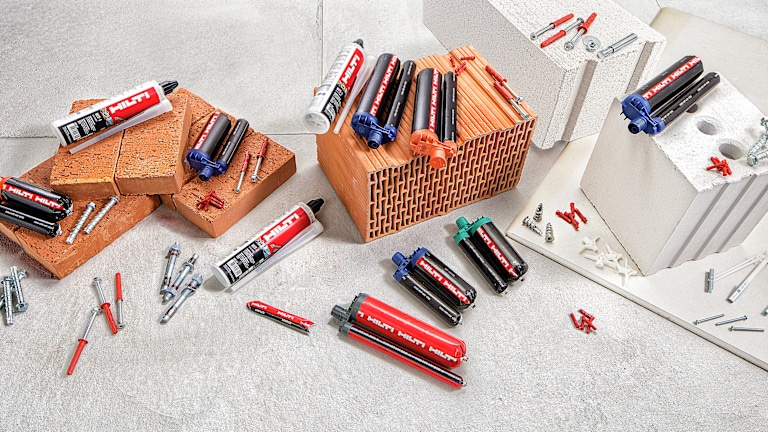
When fastening steel base plates, secondary structures, handrails, equipment, or MEP systems to concrete, two common solutions are chemical anchors and mechanical anchors.
Both can be used to create reliable connections between fixtures and a base material, but they differ in how they work, how they are installed, and where they may be most suitable. So, the key question is not simply “Which anchor is better?” but rather: Which anchoring solution best suits the design requirements and actual jobsite conditions?
What is a chemical anchor?
A chemical anchor, also known as an adhesive anchor, is an anchoring system that uses an adhesive mortar together with a threaded rod, anchor rod, or reinforcing bar to create a connection with the base material. A typical installation process involves:
Drilling a hole in the concrete or other base material.
Cleaning the drilled hole according to the anchor system’s installation instructions.
Injecting the adhesive mortar into the hole.
Inserting the threaded rod, anchor rod, or reinforcing bar.
Allowing the adhesive to cure for the required time before applying load.
The performance of a chemical anchoring system can depend on several factors, including the base material, anchor diameter, embedment depth, edge distance, spacing between anchors, drilled-hole conditions, and installation procedure. For this reason, chemical anchoring should not be seen simply as “drill a hole and inject adhesive”. It is an engineered fastening system that needs to be selected, designed, and installed correctly.
What is a mechanical anchor?
A mechanical anchor uses a mechanical fastening mechanism to establish a connection with the base material. Depending on the anchor design, load transfer may be achieved through expansion, mechanical interlock, or the geometry of the anchor and the concrete. A typical installation process may include:
Drilling a hole to the specified diameter and depth.
Cleaning the drilled hole where required by the installation instructions.
Inserting the anchor.
Setting, tightening, or activating the anchor according to the manufacturer’s instructions.
One practical advantage of many mechanical anchoring systems is that installation can be relatively fast because there is no chemical adhesive curing step.
However, loading conditions and installation requirements must always follow the technical documentation for the specific anchor system rather than a general rule for all mechanical anchors.
What’s the Difference Between Chemical Anchors vs. Mechanical Anchors?
Criteria | Chemical anchors | Mechanical anchors |
|---|---|---|
How the connection works | Adhesive mortar works together with the anchor rod or reinforcing bar to transfer loads to the base material | A mechanical mechanism creates the connection with the base material |
Typical installation | Drill, clean, inject adhesive, insert the anchor element, and allow it to cure | Drill, insert the anchor, then set or tighten it as required |
Curing time | Requires curing time, depending on the anchoring system and jobsite conditions | No chemical adhesive curing step |
Embedment depth | Some systems may offer different embedment options within their approved design range | Depends on the dimensions and design of the specific anchor |
Edge distance and spacing | Important design considerations, particularly where anchors are closely spaced or positioned near an edge | Edge distance and anchor spacing must also be checked as part of the design |
Drilled-hole conditions | Hole preparation can have a significant effect on system performance | Drilling and hole preparation requirements depend on the selected system |
Installation control | Correct hole preparation, adhesive injection, anchor insertion, and curing are particularly important | Correct hole dimensions, embedment and setting or tightening procedures are particularly important |
Typical applications | Steel connections, base plates, post-installed rebar, and other structural or non-structural fastening applications, depending on the system | Base plates, steelwork, brackets, equipment, and other fastening applications, depending on the system |
The important point is that chemical anchors should not automatically be considered stronger than mechanical anchors, nor should mechanical anchors automatically be assumed to be faster in every application.
Actual performance depends on the specific anchoring system, base material, connection geometry, loads, and installation conditions.
When should you consider a chemical anchor?
1. When the design requires flexibility in embedment depth
Some chemical anchoring systems allow engineers to design connections using different embedment depths within the system’s specified design range. This flexibility can be useful when the anchorage needs to be optimized for the actual load requirements and structural conditions.
2. When anchors need to be positioned relatively close together or near an edge
Anchor spacing and edge distance can significantly affect the resistance of an anchor connection. Where a base plate has a complex anchor layout or limited installation space, engineers may consider a suitable chemical anchoring system as one possible solution. However, chemical anchors should not automatically be assumed to allow smaller edge distances or closer spacing. The actual design must be checked using the technical data and applicable design method for the selected system.
3. For post-installed rebar applications
Certain chemical anchoring systems can be used for post-installed reinforcing bar connections, such as connecting a new structural element to an existing concrete structure. These applications need to be considered as engineered systems. The adhesive should not be selected based only on the reinforcing bar diameter.
4. When jobsite conditions require a specialized anchoring solution
Factors such as cracked or uncracked concrete, drilling method, temperature, environmental conditions, and the condition of the base material may influence anchor selection. In these situations, engineers should check the technical documentation and approved application range of the specific anchoring system under consideration.
When should you consider a mechanical anchor?
1. When installation speed is a priority
For projects with a large number of fastening points or where installation productivity is important, an appropriate mechanical anchor can reduce the steps associated with adhesive injection and curing. This can be particularly useful for applications such as base plates, brackets, equipment, or certain MEP installations.
2. When a straightforward installation process is preferred
Mechanical anchors may be suitable for applications where the design allows the use of a standardized fastening solution with a clearly defined drilling, installation, and setting process. However, a simpler process does not mean installation requirements can be ignored. Hole diameter, drilling depth, installation depth, tightening or setting requirements, and other installation parameters must still follow the instructions for the specific anchor system.
3. When the next installation step needs to proceed without waiting for adhesive to cure
In suitable applications, eliminating an adhesive curing stage can help the installation team move to the next construction step sooner. This can be an important consideration when jobsite productivity and installation sequencing are priorities.
Chemical or mechanical anchors: Which should you choose?
There is no universal answer to whether a chemical anchor or mechanical anchor is the better option. The right choice depends on the load requirements, base material, installation position, edge distance, anchor spacing, and jobsite requirements of the individual connection. Consider, for example, a common application: fastening a steel base plate to an existing concrete structure.
If the base plate contains multiple fastening points, anchors need to be positioned relatively close to a concrete edge, installation space is limited, or the design requires flexibility in embedment depth, a chemical anchoring system may be worth considering.
Chemical anchoring systems can also be relevant where the project involves post-installed rebar or a more complex connection. In these cases, the selected system should be suitable for the particular application and verified through the appropriate design process.
On the other hand, if the connection has a relatively straightforward geometry, a mechanical anchoring system can meet the design requirements, and installation speed is an important consideration, a mechanical anchor may be the more practical option. With no chemical adhesive curing stage, the installation team may also be able to proceed to subsequent work sooner, subject to the requirements of the specific system.
A simple way to think about the decision is:
Complex base plate or anchoring conditions: consider whether a chemical anchoring system provides the design flexibility required.
Standard connection where installation productivity is a priority: consider whether a mechanical anchoring system can meet the design requirements efficiently.
However, the final decision should never be based only on assumptions such as “chemical anchors are stronger” or “mechanical anchors are faster.” Neither statement applies universally.
What is the base material?
Is the connection being made to concrete or another base material, and what are its relevant characteristics?What loads will the anchor need to resist?
Consider tension, shear, combined loading, and any other relevant design conditions.Where will the anchors be positioned?
Check the distance to the concrete edge as well as the spacing between individual anchors.What are the actual jobsite conditions?
Consider the drilling method, access for hole cleaning and installation, temperature, and other relevant conditions.How important is installation productivity?
Consider not only installation time but also any waiting time before the anchoring system can be loaded or the next construction activity can begin.
In summary: where a connection requires greater flexibility in its anchoring configuration or involves post-installed rebar, evaluating an appropriate chemical anchoring system can be a useful starting point. Where the connection is relatively standardized and installation productivity is a key priority, a mechanical anchoring system may be worth considering.
For safety-critical or structural connections, however, the final selection should always be based on engineering calculations, applicable design requirements, and the technical data for the specific anchoring system rather than the anchor technology alone.