
When Should Businesses Upgrade to Professional Tools for Heavy-Duty Applications?
There is no one-size-fits-all moment for businesses to transition to heavy-duty construction equipment. But when growing workloads begin to strain existing tools, downtime impacts project timelines, operating costs escalate, and project demands become increasingly complex, it may be time to seriously consider upgrading to equipment designed for intensive, high-performance applications.
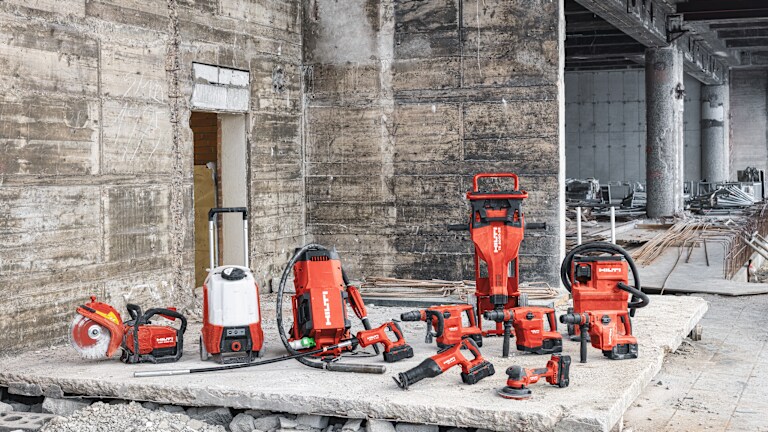
For this article, we will not define “Professional Tools” simply as equipment that is larger or more powerful.
These are tools designed to operate in demanding professional construction environments with: High frequency of use, heavy workloads, harsh jobsite conditions and high requirements for durability and reliability.
Examples:
- Concrete drilling tools used continuously on large-scale MEP projects
- Concrete demolition tools for renovation or demolition work
- Diamond coring systems for infrastructure and industrial projects
- Cutting and grinding tools used for daily construction work on jobsites
So, the next question for your business is: “When should you start considering the switch from conventional tools to professional tools designed for heavy-duty applications?”

When your business outgrows the capabilities of your current equipment
As a construction business gets started, choosing the right equipment is often relatively straightforward. The main objective at this stage is to get the job done while keeping the initial investment at a reasonable level.
However, as the business grows, takes on more projects, or expands into applications with more demanding technical requirements, the criteria for selecting equipment also begin to change.At this point, the question is no longer: “Can the tool get the job done?”
Instead, it becomes: “Can the tool help maintain productivity and competitiveness as workloads continue to increase?”This is often the point when contractors start considering a shift to professional construction tools designed for heavy-duty, high-intensity applications.
When the biggest jobsite cost isn’t the price of the equipment
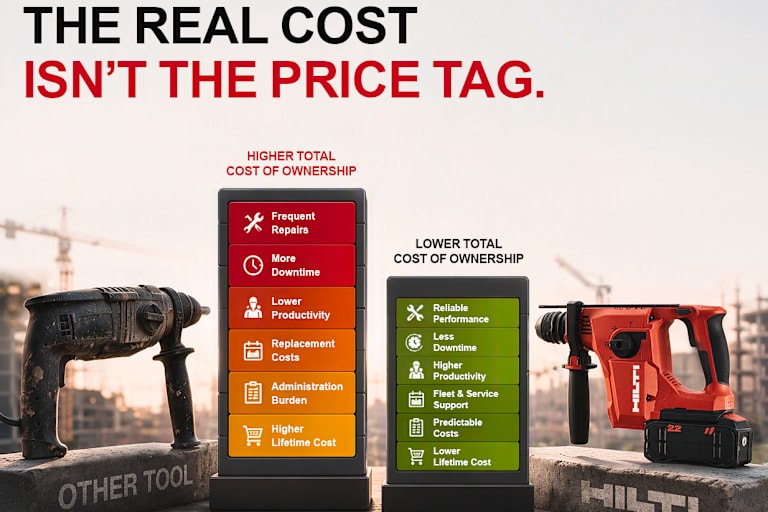
When evaluating a new investment, many businesses tend to focus primarily on the purchase price. This is understandable. However, in a professional construction environment, the initial investment often represents only a small part of the total cost over the equipment’s lifecycle. The less visible costs are often the ones that have a greater impact:
Downtime caused by breakdowns or disruptions
Project delays
Additional labor costs
Overtime costs to keep projects on schedule
Wear and consumption of consumables
Rework
For a growing contractor, losing a single day of productivity on the jobsite can sometimes cost significantly more than the price difference between two equipment options.
When Your Tools Start Affecting Workplace Safety
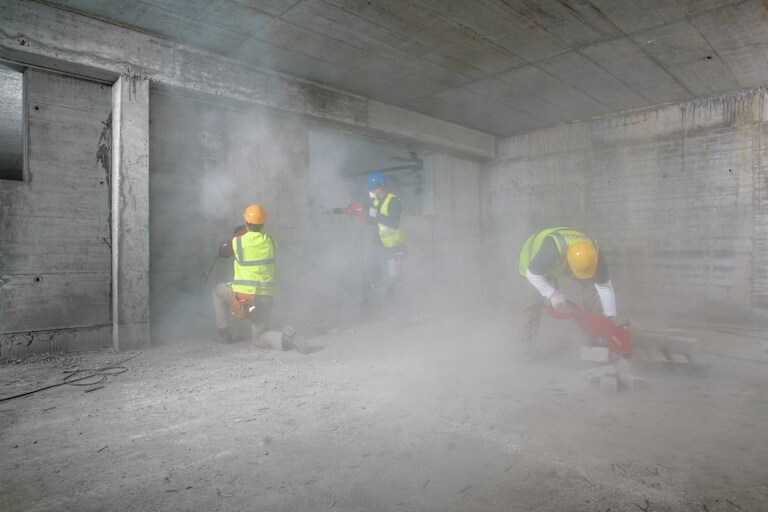
Occupational safety depends not only on work procedures or operator skills. Construction equipment also plays an important role in reducing risks on the jobsite. When the equipment you initially invested in begins to show signs such as excessive vibration, increased operator fatigue, high dust exposure, or difficulty maintaining control during operation, it may indicate that the equipment is no longer suitable for the intensity and demands of the work.
The impact goes beyond inconvenience. If these risks occur frequently, they can affect workers’ health and safety, productivity, project schedules, and your company’s operating costs.
This may be the right time to consider upgrading to professional construction equipment with advanced technologies designed to reduce vibration, control dust, and improve tool control.
When your business starts taking on more demanding projects
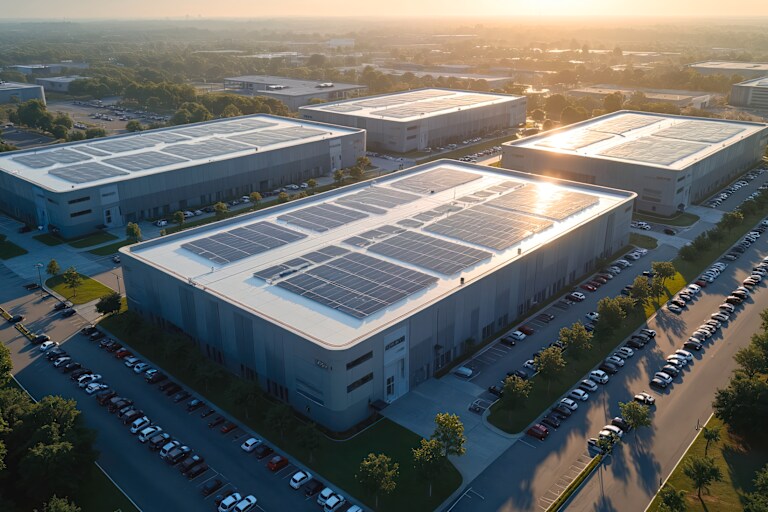
Modern construction projects are facing more demanding requirements than ever before:
Shorter construction schedules
More complex jobsite conditions
Higher jobsite safety requirements
Greater expectations for construction quality
Requirements for green building and sustainability.
Better traceability and project management
These challenges are particularly common in:
Industrial facilities
Data centers
Hospitals
Airports
Large-scale infrastructure projects
In these demanding construction environments, success is no longer measured simply by completing the job. It is increasingly defined by the ability to maintain construction productivity, ensure jobsite safety, deliver consistent quality and keep projects on schedule.
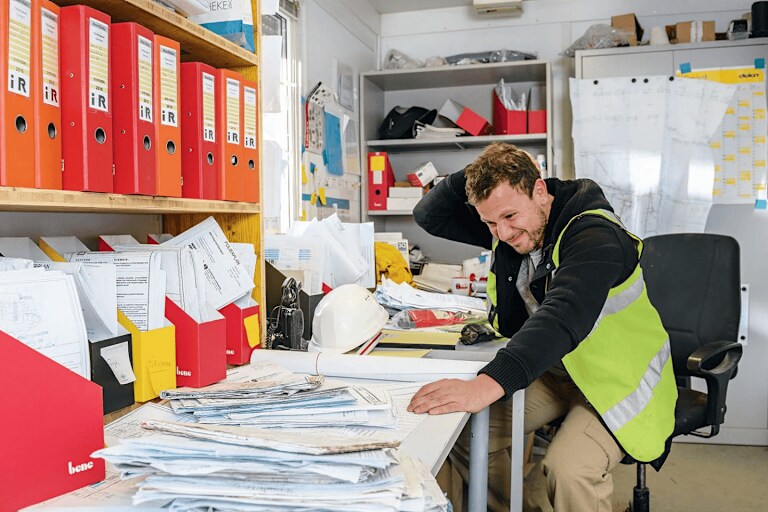
When construction productivity stops improving despite increased workforce effort
This is a pattern many jobsite managers encounter.
The workload increases.
Working hours increase.
The workforce grows.
But productivity does not increase at the same pace.
When this happens, the issue is often not the effort of the jobsite team. The equipment and tools being used may simply no longer be able to keep up with the actual demands of the work.
Adding more workers may solve the problem in the short term. But in the long run, businesses often need to reassess how the work is carried out and whether their current equipment has the capacity to meet growing demands.
Heavy-duty Tools for Demanding Construction Applications
Concrete Drilling
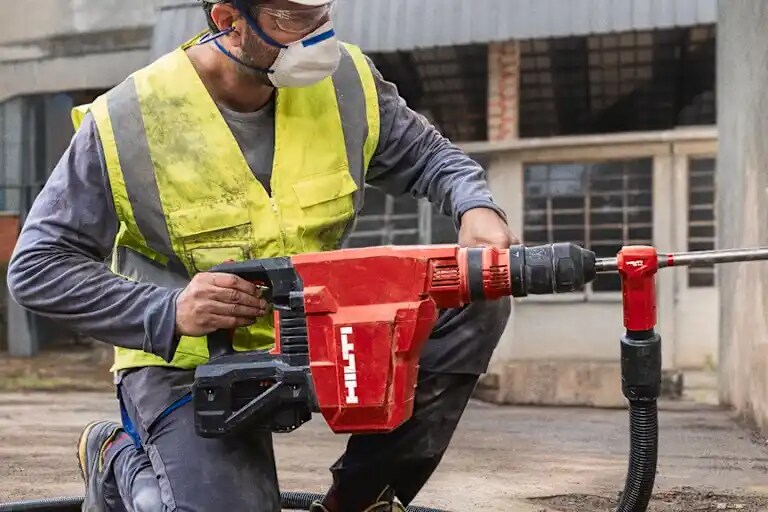
For teams carrying out drilling work regularly, choosing a tool designed for the specific application can help support a more consistent workflow. In addition to drilling performance, businesses should also consider dust control and operator-support features when evaluating equipment.
Hilti rotary hammers are designed for a wide range of professional drilling applications, allowing businesses to select tools around the work that needs to be done rather than simply opting for higher power.
Chiselling and Breaking
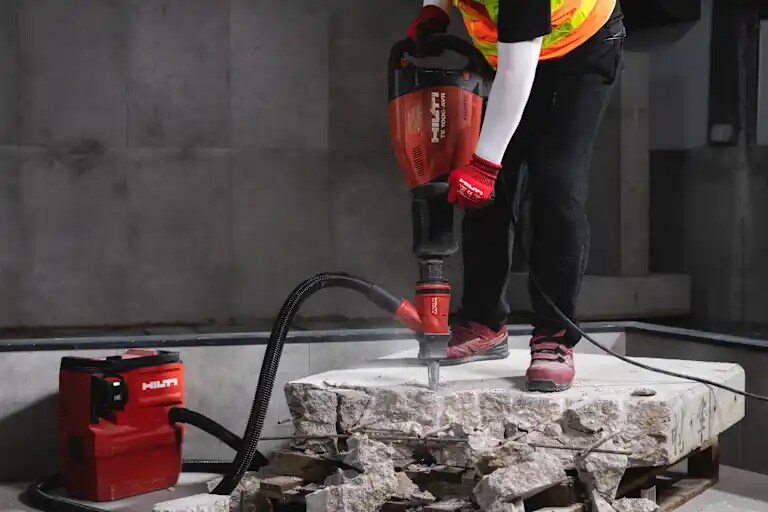
Concrete chiselling, channel work and demolition can place significant demands on both equipment and operators, particularly when the work continues for extended periods. When upgrading equipment, businesses should consider the amount of material to be removed, operating time, tool control and vibration exposure.
Hilti offers professional breakers and demolition hammers for different levels of work, from corrective chiselling and channeling to heavier concrete demolition applications. Depending on the application, tools can also be combined with compatible chisels and dust-control solutions to create a more complete working system.
Diamond Core Drilling
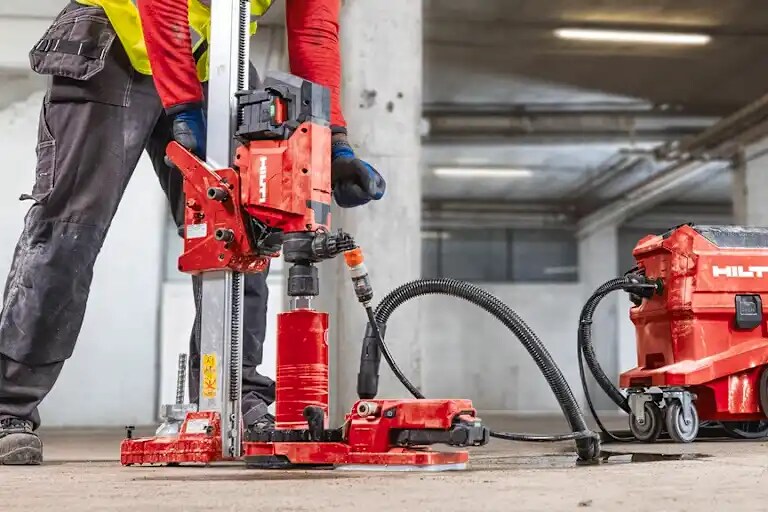
Rather than pushing conventional drilling equipment beyond its intended application, businesses should evaluate the required hole diameter and depth, base material, drilling conditions and appropriate drilling method.
Hilti diamond core drilling systems are designed for professional applications in concrete and suitable base materials. Selecting the drilling machine, diamond core bit and system components together allows contractors to build a solution around the requirements of each application.
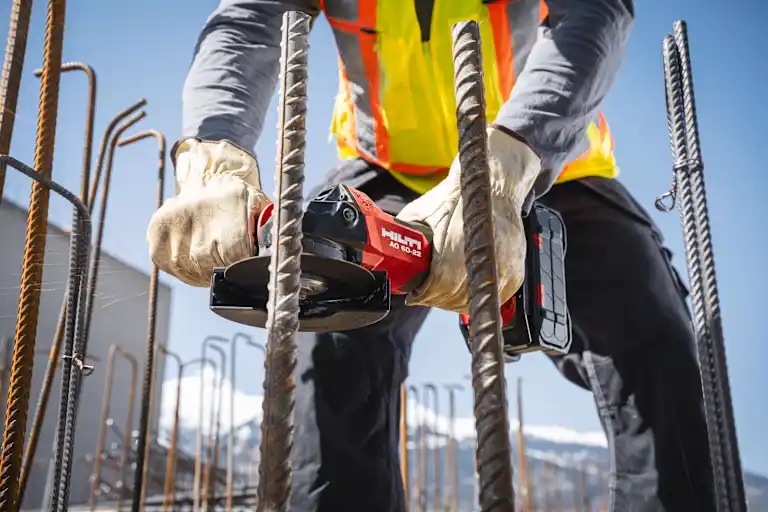
Cutting and Grinding
Cutting and grinding are used throughout construction, from cutting materials and creating channels to surface preparation and finishing. As the frequency and intensity of these tasks increase, tool selection needs to consider more than cutting speed alone.
Hilti offers professional cutting and grinding solutions for a range of jobsite applications. Depending on the task, contractors can select compatible tools and consumables while incorporating an appropriate dust-management solution into the workflow.